
Frankly Speaking
Here's why Democratic politicians talk like defective robots

Welcome to the weekend edition of The Experiment, your official hopepunk newsletter. If you’d like to support my work, become a paid subscriber or check out the options below. But even if you don’t, this bugga free. Thanks for reading!
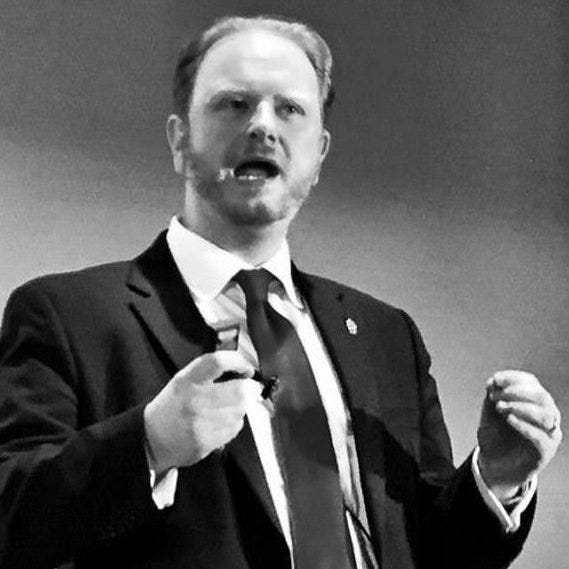
Frank Spring first noticed the problem in 2010 when he was providing political consulting for dozens of Labour Party candidates in England. Over a period of a couple days, he met with each candidate and asked the same question: “Why are you running?” Their answers mirrored each other so much that he thought he was conflating them. Surely not every one of them is running because of Margaret Thatcher? And worse, it was as if each politician had forgotten how to talk like a fully functioning human being, and after awhile, they started sounding like Charlie Brown’s teacher, except posh. “They were incapable of talking like a human being,” said Frank. “I thought I was going insane.”
Frank allows that there are bigger reasons a group of similar people will begin to talk similarly, notably tribal identity and the instinct to treat that tribe’s enemies as the out group. Also, they all went to the same finishing schools.
But Frank has decided that the biggest reason these intelligent, educated, and outgoing individuals came to speak like malfunctioning androids indistinguishable from each other was a political culture that “trained, incentivized, and socialized them to talk alike,” leaving them, said Frank, “incapable of talking like a normal person.”
“They were incapable of talking like a human being.”
Frank, then 29, hoped this problem was confined to British liberal politicians. After all, the United States had just elected the famously eloquent and engaging Barack Obama, whose backstory was so compelling that it became a best-seller and whose oratory packed arenas. This hope lasted as as long as it took to clear customs and watch the news.
“Oh f*ck,” Frank thought.
Unless you are deep inside the Democratic messaging apparatus, this problem is self-evident. Part of it is the mealymouthed cliches reverse engineered to appear to take a stand without causing offense. “Standing with working families,” “My commitment to working men and women…,” “…continue leading the charge to protect us…,” “…fighting for what matters most—strong schools, affordable and accessible healthcare, and fair wages…” Cliches, cliches, as far as the eye can see, and not a spot to think.
Worse, this drivel is delivered in a dutiful, nearly human-sounding tone of voice that performs more than it communicates. Like the compulsory figures that figure skaters used to perform, candidates precisely trace polling directives and demonstrate message discipline. You can hear the recitation, not the communication.
You know how this comes across because you feel it hit your ears wrong. Democratic politicians, because of this institutionalized caution, tend to sound foolish, evasive, and condescending, as if McKinsey had coached them to treat voters like overly sensitive schoolchildren.
And we get fed a steady stream of lackluster candidates who all sound disappointingly alike in their inoffensive obtuseness. Case in point, senate candidate Colin Allred, a man once so aggressive and confident he played linebacker in the NFL and who now serves as a prime example in the Democratic Party’s continued delivery of off-putting standard bearers. “We can have a senator who cares about all of us and will fight for all of us,” he said in a recent television interview. To quote King George in Hamitlon, “Awesome. Wow.”
Frank traces the problem to Democrats’ reaction to getting their butts regularly and soundly kicked by Ronald Reagan in the 1980s. After Jimmy Carter, Democrats were often maligned as leading with their hearts, not their heads. “Liberal” had become a dirty word, and not in the fun way. We wanted to win, but first we wanted not to get hit, and above all, we needed to come across as serious.
Two big things arose from this: message discipline and Bill Clinton.
Message discipline was a management strategy to capitalize on the news media infrastructure of the day. If the TV news is only going to use one quote from the interview, for God’s sake say the answer you want them to use over and over again, and for crying out loud, don’t say anything off script because they’ll definitely use that. Stay. On. Message. (From this talking points were born. It wasn’t my idea, but I still feel like I should apologize.)
And because Bill Clinton’s triangulation also was ascendant at this time (as well as intertwined— “It’s the economy, stupid”), his legacy is associated with message discipline, which is hilarious, because Clinton was perhaps the most undisciplined communicator of all modern presidents. Don’t get me wrong, he could hold a crowd spellbound with homespun stories, wonky policy speeches, and eulogies to the country, but to think of his two terms as an example of any kind of message discipline is to invite mockery from your elders.
Nevertheless, after two terms in the White House when he beat back both impeachment and the second-term jinx (when second-term presidents historically lose congressional seats in the off-year elections), Democrats learned the wrong communications lesson from winning. (This will become a theme.)
Democrats learned the wrong communications lesson from winning.
Clinton had made communicating seem so easy, Democrats didn’t appreciate his virtuosity or dedication to telling his personal story as the “Man from Hope.” And where Clinton had revolutionized the means of communication by circumventing the White House press corps and going directly to local media markets, Democratic institutions began centralizing the messaging.
If you wanted support from the Democratic Party running for Senate or Governor, and later Congress and state legislature, you had to hire the consultants on their approved vendor lists, and they would only give advice that the party organs in Washington approved. Rebellious consultants and candidates were punished by being cut off from fundraising.
This structure enforced a sameness, if not a blandness, in messaging. (See also: Al Gore and John Kerry.) Candidates were encouraged not to tell stories. Just push the issues by sticking to the talking points. That’ll protect you. Don’t give the reporters anything new or different. It was as though the Out-of-Powers That Be would rather lose boring than win weird. The Democratic Party would rather have candidates off book than off message.
Then came Barack Obama. Do you remember the first time you heard him speak? Rather, do you remember the first time he captured your attention? Maybe it was when he talked about his father who grew up herding goats in Kenya in his 2004 DNC keynote that built to this thrilling line in a time of deep national division: “There are no red states or blue states, only the United States.”
Somehow I missed that. It was only after he won the Iowa Caucuses in 2008 that I paid him any real attention, and even then it was only because he commanded it. The truth is that my then-girlfriend and I were a couple of political junkies, the kind of people who kept election returns on in the background while we canoodled. So I was a little distracted when Obama began his victory speech, but by the time he got to “We are choosing hope over fear. We're choosing unity over division, and sending a powerful message that change is coming to America,” she and I were rapt as the skinny senator with funny-looking ears described a new way to understand America through his story.
And after his two terms in the White House, Democrats again took the wrong lesson from success. Instead of recognizing the power of a compelling personal story, the Democratic infrastructure instead focused on the data-driven innovations pioneered by the Obama team. Precise calculations derived how many door knocks were needed to get someone to vote, as if voter turnout were simply a matter of checking boxes. When you get to the door, stick to the script, block-walking volunteers were admonished. Remember to upload your data.
Narrow casting the electorate yielded narrow stories about America to ever-narrowing slices of its citizens. And evermore, the messaging dictums sought to avoid backlash, political positions avoided specifics, and being liberal came to mean everyone being nice to each other. As younger generations became increasingly angry about their economic lot, the Democratic Party emphasized rationality and avoided the appearance of hostility. “I genuinely believe that the lesson they took from that was they cannot appear to care about anything too much,” said Frank.
“The lesson they took from that they cannot appear to care about anything too much.”
Thus did Obama’s bro-y “Don’t do stupid sh*t” dictum become the Bill & Ted ethos to “be excellent to each other,” which sounds nice but doesn’t mean anything during a housing crisis. “Being excellent to each other is good interpersonal advice but it has no political utility in a country where the cost of living was at the time well on its way to doubling in 20 years and where a lot of people were most certainly not being excellent to each other,” said Frank.
This is why Democratic voters are constantly falling in love with candidates of varying merit who manage to appear different and talk like a normal person. Bernie just said it, man. Beto rode a skateboard and told the truth. AOC was a bartender who voiced the anger of the dispossessed. I have my own feelings about them—some I like more than others—but each of them shares an important virtue: They’re different, or as the kids say today, authentic.
Frank Spring, now 44, had spent a decade and a half working in politics while privately bemoaning this problem to anyone who would sit still long enough. Recently, he decided to do something about it.
He started two companies focused on the power of storytelling in political settings, one focused on research and the other to teach Democratic politicians to talk like normal people. Remarkably, neither of the companies is called Frankly Speaking or Spring Training, and the world’s poorer for Frank’s want of whimsey. But consider this: There is a market need for someone like Frank to teach politicians to talk normally.
If there’s good news, it’s this: “I sense that we’re coming to the end of this cycle,” said Frank. Politicians who want to solve the actual problems facing our country might soon be moving past meaningless peans to “fight for you” and actually share with us some understanding of what is happening. It’s time for Democrats to stop talking like they’re scared of getting into trouble. Trouble is upon us, and a lot of us are scared.
It’s time to get real.
Jason Stanford is a co-author of the NYT-best selling Forget the Alamo: The Rise and Fall of an American Myth. His bylines have appeared in the Washington Post, Time, and Texas Monthly, among others. Email him at jason31170@gmail.com.
Further Reading


Drunk History, Mitch Edition

Frank Spring is back, accompanied by his friend and coconspirator, pollster Marcus Roberts, with a rundown of political advice they got from Mitch McConnell over several rounds. Long story short, Democrats should play to actually win once they’ve won. But how did Frank and Marcus end up having drinks with Mitch? It’s a long story.
The Accidental Hilarity of the Anti-Woke

Welcome to the weekend edition of The Experiment, your official hopepunk newsletter. If you’d like to support my work, become a paid subscriber or check out the options below. But even if you don’t, this bugga free. Thanks for reading!
We set up a merch table in the back where you can get T-shirts, coffee mugs, and even tote bags now. Show the world that you’re part of The Experiment.
Buy the book Texas Lt. Gov. Dan Patrick banned from the Bullock Texas History Museum: Forget the Alamo: The Rise and Fall of the American Myth by Bryan Burrough, Chris Tomlinson, and myself.
https://open.substack.com/pub/joshstanfield/p/means-of-control-lopsided-mous-give?r=f5mz&utm_medium=ios This leak from a Virginia Democratic committee shows the exact problem you call out - candidates being forced to use the same consultants and conform in order to get campaign cash.